
100A to 200A: What a Panel Upgrade Actually Involves
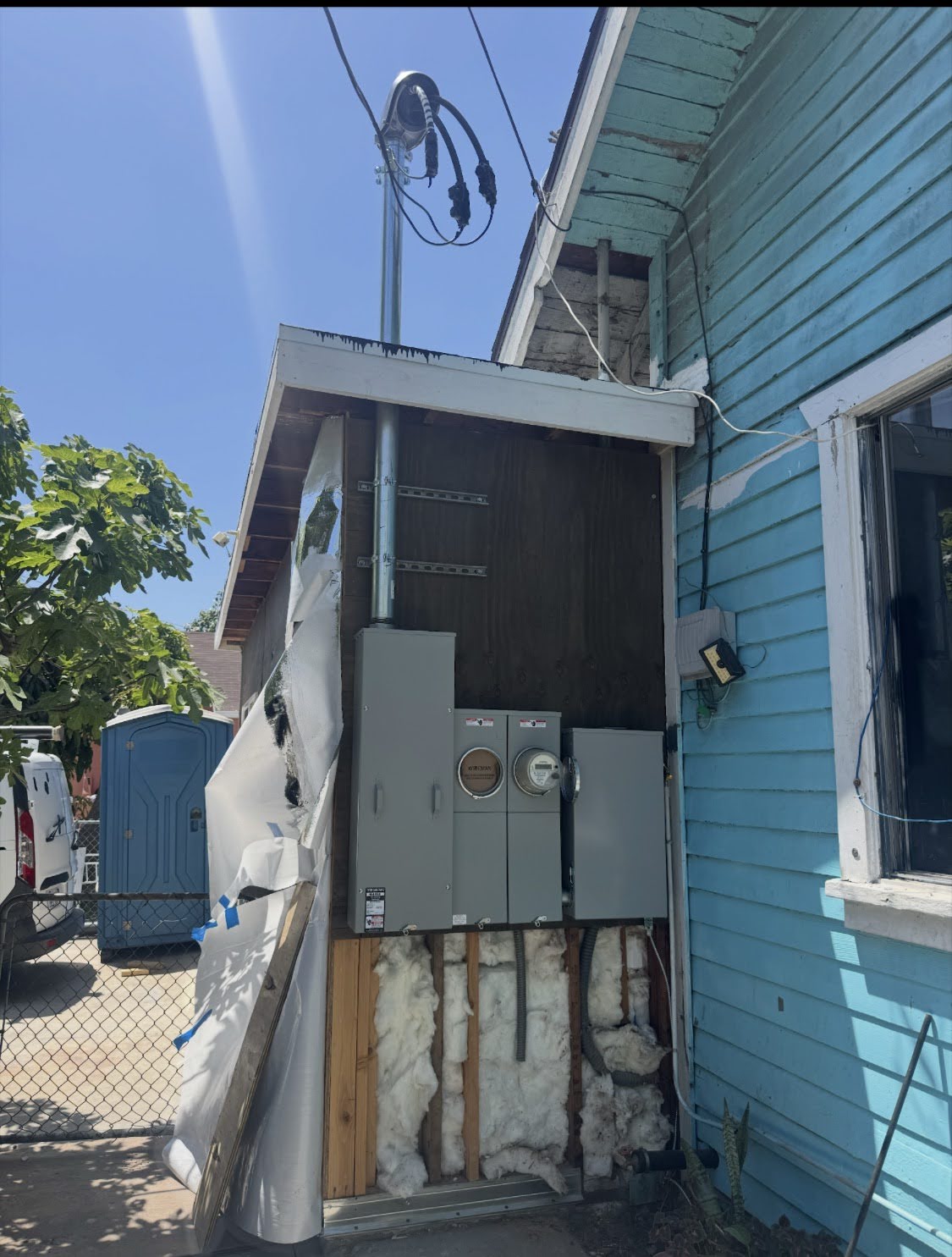
Most homeowners never think about their electrical panel until something forces the issue — a home inspector flags it, an EV charger won’t fit on the circuit, or breakers start tripping more than they used to. A panel upgrade isn’t glamorous, but it’s one of the few electrical projects that touches almost everything else in the house.
Signs your panel might be undersized
A few things tend to show up before a panel becomes a real problem:
- Breakers trip more than they used to, especially when running two higher-draw appliances at once
- No open slots left in the panel for a new circuit — common in older homes with a 100A panel that predates central air, EV charging, or a home office setup
- Flickering or dimming lights when something else on the circuit kicks on
- A panel that’s visibly old — rust on the cabinet, a fuse box instead of breakers, or a brand no longer supported with replacement parts
None of these guarantee you need a full upgrade — sometimes it’s a single bad breaker or a loose connection. That’s exactly why this isn’t a project to diagnose from a checklist online. An electrician opening the panel is often the only way to actually know what’s going on behind the cover.
What the upgrade process looks like
A typical 100A to 200A upgrade follows the same basic sequence:
- Load calculation. We calculate your home’s actual electrical demand (per NEC 220.82) to confirm 200A is the right size — not still too small for what you’re planning to add later (EV charger, ADU, etc.).
- Permit and inspection. Every California city requires a permit and inspection for a panel upgrade under its local adoption of the California Electrical Code (Title 24, Part 3) — in the City of Los Angeles that’s the LA Electrical Code (LA Municipal Code Chapter 93). The permit isn’t paperwork for its own sake — it’s what makes sure the work gets independently checked before it’s covered up.
- The install itself. This usually means a new panel, new main breaker, and in most cases a brief power shutoff while we disconnect and reconnect service. We schedule around this so it’s a predictable inconvenience, not a surprise.
- Final inspection and sign-off. The job isn’t done until it’s inspected and passed — that’s what the permit exists to confirm.
The savings, and who actually qualifies
Many homeowners qualify for help covering the cost of a panel upgrade — up to $2,100 toward a qualifying upgrade. It isn’t a blanket discount. A lot of it comes down to how your home is fed — whether it has its own electric meter and its own main breaker panel, not shared with another home — and that’s something we check by looking, not by guessing. We don’t decide who qualifies, and not everyone does.
Amounts shown are estimates only and subject to qualification, eligibility, and available funding. Not everyone qualifies. The exact amount and all terms are confirmed with you before anything is signed.
The quickest way to see where you stand is to check your address → — a preliminary look at whether your address is in an area that may qualify. It isn’t an approval and it never sees your electrical panel: we confirm what you actually qualify for at a free, no-obligation assessment, before anything is signed — not after.
If you’re not sure where you stand
If any of the signs above sound familiar, or you’re just planning ahead for an EV charger or other upgrade, the honest first step is having one of our licensed electricians actually look at the panel. We’ll tell you straight whether you need a full upgrade, a smaller fix, or nothing at all right now. Our C-10 license is #1100745 — checkable on the CSLB website before you let anyone open a panel.