
Commercial Electrical Maintenance for Los Angeles Businesses: What You Need to Know
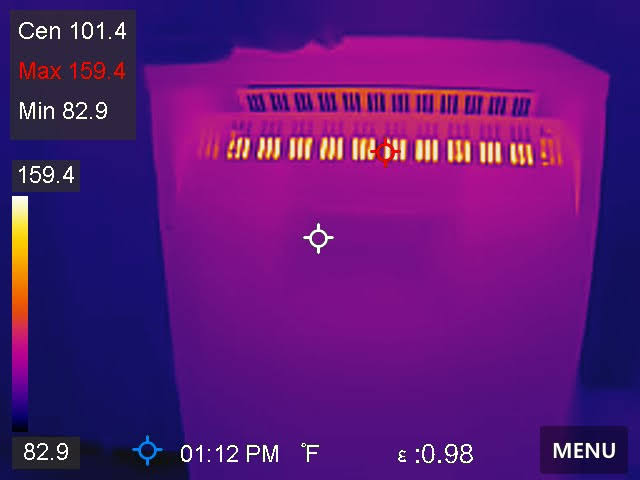
Most commercial electrical failures don’t happen without warning. They happen without anyone looking. A connection runs hot for months before it fails — the difference between a routine repair and a shut-down emergency is whether someone found it in month one or month eight.
This is the guide for property owners, facility managers, and business owners who want to know what preventive electrical maintenance actually covers, how often it’s needed, and what a real inspection finds before it becomes a problem.
What Is NFPA 70B — And Does Your Facility Need It?
NFPA 70B is the national standard for electrical equipment maintenance — it defines what preventive maintenance actually looks like for commercial and industrial electrical systems, as opposed to waiting for something to break.
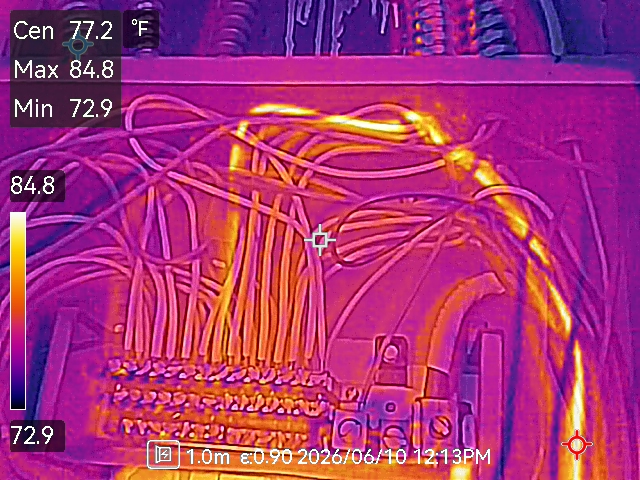
Our NFPA 70B-aligned inspections use infrared thermal imaging to find developing problems — loose connections, overloaded circuits, failing components — while they’re still just heat signatures, not failures.
If your facility has never had a baseline electrical inspection, you don’t know what condition your system is actually in. You know what condition it was in when it was installed.
→ What NFPA 70B inspections cover, and whether your facility needs one
How Often Should a Commercial Panel Be Inspected?
Inspection frequency depends on facility type, equipment age, and load — a data center and a small retail space don’t carry the same risk profile.
What’s consistent across facility types: a baseline inspection establishes what “normal” looks like for your specific system, and every inspection after that gets compared against it. Without a baseline, an inspector is guessing at what’s changed.
→ How scheduled preventive maintenance works, and how often
Arc Flash Hazard Assessment
An arc flash is an electrical explosion — and it’s a real, quantifiable risk in commercial and industrial settings with higher-voltage equipment, not a hypothetical. An arc flash hazard assessment identifies where that risk exists in your system and what PPE and safe-work boundaries are required around it.
This isn’t optional paperwork. OSHA and NFPA 70E both establish real obligations around known electrical hazards in the workplace. Not having your system assessed for arc flash risk doesn’t mean it’s safe — it means nobody has checked.
Signs Your Commercial Building Needs a Panel Upgrade
A few patterns worth taking seriously:
- Breakers trip regularly under normal load — not a one-time event, a pattern
- Panel is original to a building older than 20–25 years, especially if equipment loads have grown since
- Visible discoloration or heat damage at breaker connections
- You’ve added major equipment — HVAC, commercial kitchen gear, server racks — since the panel was installed
- An electrician has flagged it verbally but nothing’s been documented
Any one of these on its own isn’t necessarily urgent. Two or more together is worth a real assessment.
→ Signs a commercial panel needs upgrading — and what the upgrade involves
Emergency Electrical Response for Businesses
This service is commercial and industrial only. We don’t provide residential emergency electrical response — this is a scope limitation, not a positioning choice.
For commercial and industrial clients, a real emergency response plan means knowing before an outage happens: who to call, what information they’ll need on-site, and what your typical response window looks like. Facilities on a service contract already have this mapped out — one call, one number, no explaining your building’s history to someone new every time.
→ 24/7 emergency electrical response for commercial and industrial facilities
Thermal Imaging: The Step Most Businesses Skip
A visual inspection tells you what a connection looks like. A thermal inspection tells you what it’s doing. Heat doesn’t lie — a loose connection generates resistance, resistance generates heat, and heat shows up on an infrared camera long before it shows up as a failure anyone can see.
This is the single most useful thing a facility can add to its maintenance routine that most never do — not because it’s expensive, but because nothing visibly forces the question until something fails.
Electrical Code Compliance for California Commercial Facilities
California adopts the National Electrical Code (NEC) on its own schedule through the California Electrical Code (CEC), and commercial facilities are expected to comply with whatever cycle is currently adopted in their jurisdiction.
Staying current isn’t just about avoiding a citation — outdated code compliance is one of the first things flagged in an insurance audit or a building sale inspection.
Schools and Institutional Electrical
Institutional facilities — schools, care facilities, public buildings — carry electrical compliance requirements beyond standard commercial code, often with additional inspection and documentation requirements tied to occupancy type.
Generators and Transfer Switches
For facilities where downtime has a real cost — refrigeration, medical, data, manufacturing — a properly wired transfer switch is what makes a backup generator actually useful instead of just present. Improperly wired backup power is a safety hazard to utility workers on the grid, not just a facility risk.
→ Generator and transfer switch installation for commercial facilities
Choosing a Contractor for Commercial Electrical Work
Commercial and industrial electrical work carries different stakes than residential — downtime costs money, and compliance failures carry liability. Look for:
- C-10 license, verified — ours is #1100745
- A documented NFPA 70B-aligned inspection process — not just “we do inspections”
- A single point of accountability for the job, not a rotating crew
- Documented findings, not verbal impressions — a real inspection produces a report
Next Step
If your facility has never had a baseline thermal inspection, that’s the place to start — not a full system overhaul, just a real look at where you actually stand. See our commercial services →
Request a Baseline Thermal Inspection →
Or call 323.807.4543